What is a Developmental Community? An alternative perspective
Most 'communities' are simply classrooms in disguise. A true developmental community does not exist to build capability; it exists exclusively to evolve capacity. It is not an institution I join, but an ecology I curate to hold the supreme hazard of my own life.

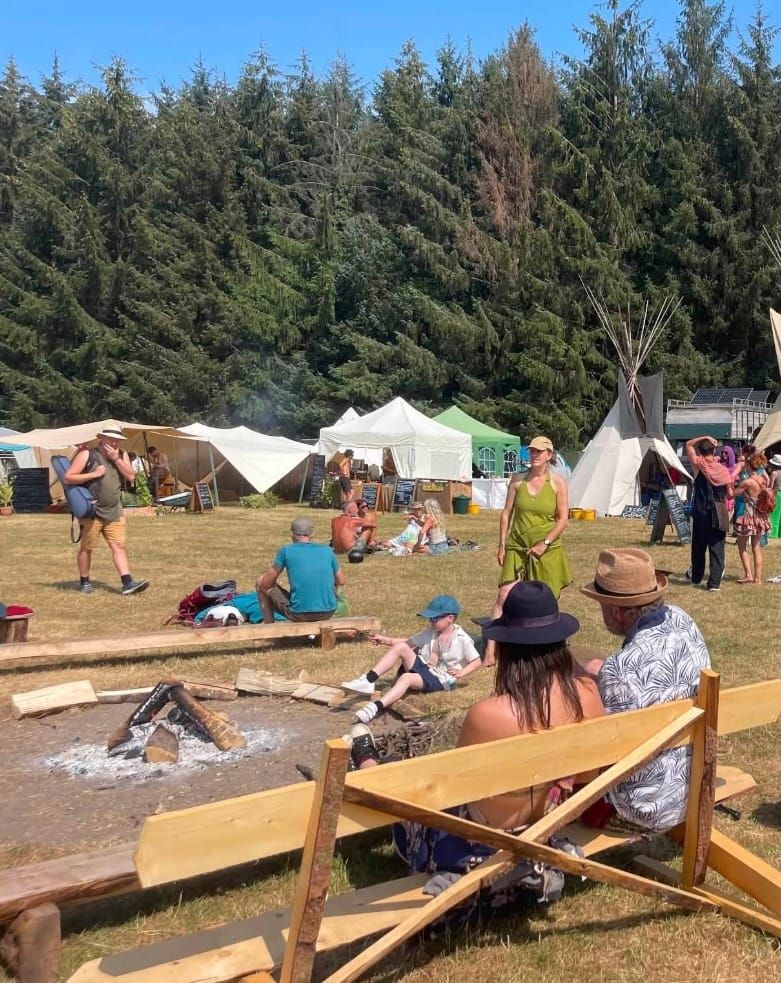
If you have recently sat around one of my Campfires, you know the physical difference between consuming a syllabus and standing in the heat.
I believe most spaces that call themselves "communities"—even "communities of practice" or "Sanghas"—are simply classrooms in disguise. They are built to transfer information, teach frameworks, and build capability. They are highly organized, designed to be safe, and ultimately operate on the assumption that I need an expert to fix me or teach me.
They offer a map of a fire. But a theory, will not keep me warm when the messy, un-sanitized reality of my local ecology strikes.
Recently, in a Citizen’s Veto Campfire, I realised I need a completely new architecture for how I understand community.
A true developmental community is not an institution I join. It is an ecology I curate.
It is completely unique to me, as an individual, and entirely self-determined. It is not defined by a single guru, a specific program, or a brand name. My developmental community is the specific constellation of groups, campfires, and spaces that I consciously choose to participate in to resource my own evolution.
For me, that currently looks like hosting two Campfires and sitting in two different sacred text reading groups and fortnightly calls with a couple of buddhist friends. That specific combination is my community. Yours will look different.
But what I believe binds a true developmental community together is not a shared syllabus. It is a shared field.
It is a field that coheres around a single, demanding reality, and in Regenerative w/Work it is: the friction, struggle, and hazard of evolving our capacity to regenerate life.
A true developmental community exists exclusively to evolve capacity—the expansion of my internal vessel to hold the supreme hazard of my own life without bracing, panicking, or demanding to be rescued. Imagine the size my vessel would have to become if it was holding the hazard of all life in my local ecology. How is that possible? Is it possible?
I do not gather to fix other's behaviour. I do not gather to consume new theories. I gather to bring the raw friction of my localised Charnel Ground to the fire, trusting that living systems can regenerate themselves if given the space to breathe.
There is no safety net, no membership fee, and no one to blame. I am entirely responsible for striking my own flint.
If I am looking for an institution or someone to lead, teach or save me, I don't go and knock on their door. But if I am willing to look directly at the living systems, stand in the local dirt, I am dependent upon and curate my own ecology of fire, I know by attending specific groups, campfires, and spaces I will evolve.
see you at a campfire,
Ākāśaḍāka