The Truth about Dragons: Exploring the Regenerative Earth Tender Role
Scientific materialism once hid the invisible from me, but I am learning to listen. Exploring the lore of the dragons and my own visionary experiences, I seek a deeper connection to my local ecology. This summer I will walk the Tararu, inviting the unseen to share its treasure.


There be dragons
I find this hard to believe. The scientific materialism that dominates my worldview suffocates any such possibility. But I have a friend who says this is not true; this is not her reality. She says they are all around me, waiting for my invitation.
There are cracks—like holes made by hail, sometimes meteors—in the glass dome of my materialist view. There is too much that is invisible that affects my life for me to believe only in the visible. This means there is possibility. Then there are my inner experiences. I did not invite them. Well, one I did, and was shown an ocean floor. Others have just turned up. So, I am listening.
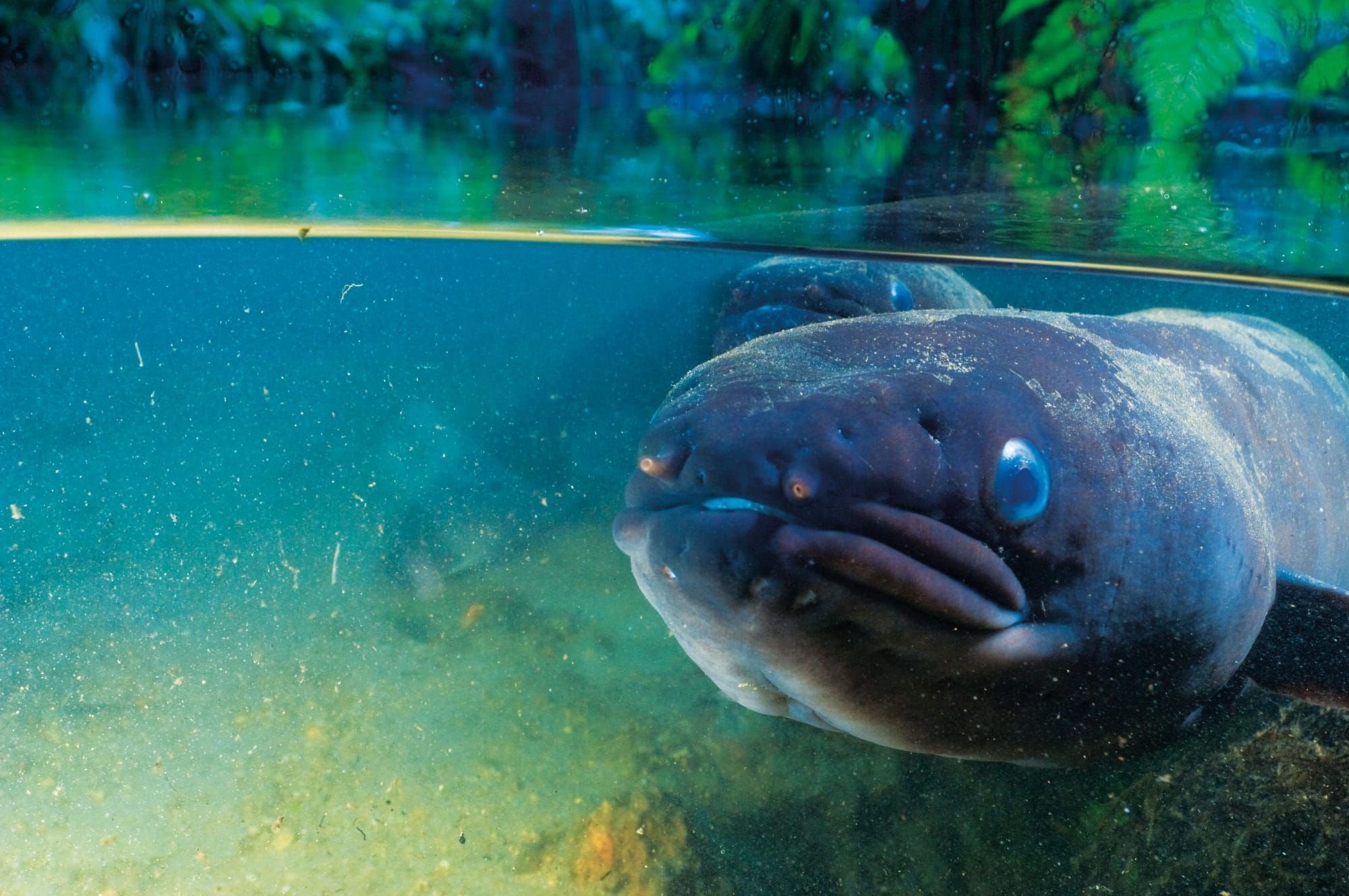
There are a couple of rivers and streams I have swum in over the years: the Tararu and the Kauaeranga. I have seen eels in both. Long, serpent-like, and slimy. They are just eels.
The Māori talk of taniwha. They can be like dragons or serpents but can come in many forms. Why did the Māori recognise the taniwha? It is a profound part of their lore, always associated with the sacredness of water. So, I am listening.
And it is time to start looking. Looking for their signs. Huan Tao has offered a practical guide, naming what their biology is like and detailing physical features, such as how they all have exactly 117 translucent scales. Their third and fourth talons are hinged like an opposable human thumb. They are reportedly earthbound for the first 1000 years of their lives and hibernate in the winter, their hearts beating just once per minute unless disturbed.
So I will begin to look, this summer in the Tararu and the Kauaeranga, away from people and the old iron ruins of past industry—the industry of kauri logging and gold mining. Iron acts as a severe biological poison to them; it makes their skin blister and necrotic. Knowing they have a palate for walnuts and berries, I will take a container with me and make offerings.
My friend will be pleased. And ecologically, it makes sense. Before human industry invaded, our precious water was pure, the earth undisturbed. In the stillness of the dark night, before twenty-four-hour light, we could rest together and meet around the campfire through the stories of adventure.
I know these living energies have treasure. But it is not gold. That is a modern, material fixation. These dragons, like kaitiaki, like regenerative earth tenders, revere the places they inhabit. They treasure life and are waiting for an invitation to tell me about it.
Dragons be real.
I am scared and in love. I have already met three huge taniwha in my visionary experience: one wrapped around the stupa at Sudarshanaloka, another emerging from the waiata and conch of Ngāti Whātua Ōrākei at dawn, and another while riding the ferry to Waiheke Island. I told—and sometimes I think I told the wrong people about these profound subjective experiences. But I have also told some of the right people, those who seem to know how to listen to my story.
I am listening and will start to walk this summer up the Tararu and Kauaeranga, where humans seldom go. I will go gently, singing and inviting that which is unseen to come and share.
Dragons be here.
see you at a campfire,
Ākāśaḍāka
Further resources