The Brutal Trickster and the Regenerative Spirit Resource
That urge to disrupt business as usual is the trickster waking up. But forcing change on others only triggers defense. To serve your local ecology, evolve into a Regenerative Spirit Resource and let the fire burn away your own certainty first. We are not robots.



I have often felt the urge in meetings or conversations that are literally draining my life energy to do something stupid or say something outrageous to wake myself and everyone up from the trance of business as usual. We are not robots.
That spark of disruption can be seen as the trickster waking up in my nervous system. It is that part of me that refuses to be contained or to blindly comply. At times, the more agency I have given my trickster, the more wild and uncontrollable he has become. Belly laughing and chuckling. Robots can only pretend to belly laugh.
I have a clear memory of being in a Buddhist ceremony at night, deep on a retreat in the Coromandel Ranges. The energy in the room was so nauseatingly compliant and "arse-kissing" that when it came to my turn to speak, I did the haka. I stood up out of the kumara pit and let the sun in the sky touch my skin.
It shook the room. I heard afterwards that the senior leadership argued over its appropriateness. I realized I was testing them to see if they could handle my energy. It had consequences—some remain wary of me, while others completely understood it.
I believe this trickster energy is vital to the process of waking up. However, it can be used in brutal ways that wound and anger unsuspecting targets. Let’s explore this energy through the four modern paradigms to see what is revealed:
In the Value Return paradigm, the trickster acts as "The Market Disruptor"—a chaotic genius, troll, or strategic manipulator. Their shocks are weaponized to extract attention, capital, or market dominance. The energy is converted into personal gain at the expense of system stability. Elon Musk’s market-moving Dogecoin tweets or his erratic reshaping of Twitter operate as a brutal trickster, breaking established corporate and social norms purely to maximize personal leverage, extracting value while destabilizing the ecosystem.
In the Arresting Disorder paradigm, the trickster acts as "The Vigilante Whistleblower"—labeled either a martyr or a terrorist, depending on who holds the power. They break the rules specifically to expose the corruption of the rule-makers. Because this operates through force rather than permission, it inevitably triggers those who comply to defend themselves, resulting in tighter security, harsher crackdowns, and deeper polarization. This was my experience during COVID when I refused the vaccine mandate. I did not comply because it was being forced upon me, and I called it out. The systemic result was an immediate, forceful exclusion from my local community and Sangha, the majority of whom had complied. The energy shattered the illusion of safety, but lacked the capacity to build anything new.

In the Do Good paradigm, the trickster acts as "The Moral Satirist"—the cultural judge using mockery, exposure, and cancel-culture mechanics to enforce a "better" ideological standard. It creates compliance through the fear of public humiliation. It successfully points out societal hypocrisy but leaves the targets wounded, defensive, and entrenched in their current paradigm. Sacha Baron Cohen’s Borat uses brilliant, brutal trickster energy to trick individuals into exposing their own prejudices. The audience gets to feel the warmth of the moral high ground, but the targets are simply humiliated for entertainment, completely devoid of any pathway to access a higher order.
In the Regenerative Life paradigm, the trickster evolves into "The Spirit Resource"—no longer a disruptor, but a Reconciling Force and Gardener of Conditions. They refuse to validate the ego's clinging, holding up a mirror with such unattached clarity that illusions simply self-liberate. Because this energy is only deployed after permission is established, the friction doesn't wound; it breaks the stuck pattern and evokes development. The Vimalakīrti Nirdesha sutra operates with pure, high-level trickster energy when Vimalakirti stupefies the Buddha's top disciples in paradox. He ruthlessly dismantles their rigid, institutional frameworks—but he does not do this in the public square to shame them. He does it within the boundaries of his own home, to guests who have explicitly arrived to engage with the Dharma. His trickster strikes are acts of deep, liberative art.
When we operate the trickster as a blunt instrument of force, attempting to dismantle others' habits without their permission, we inevitably trigger their defenses. We might believe we are speaking truth to power, but the reality is we often leave our targets more entrenched in their current patterns. As I have recently discovered in my own practice, even gentle play can be brutal to another if they did not ask for it.
This is the trap of the Brutal Trickster. It is an extractive pattern masquerading as a regenerative one, and it drains the life energy from the very communities we wish to resource.
To evolve this energy into a valued role within our local catchments, the trickster must mature into the Regenerative Spirit Resource. This transformation begins the moment we stop trying to hack everyone else's patterns and use the energy to disrupt our own. We play with our own beliefs, our unconscious assumptions, and the fabrications we have identified with. Before we can dismantle the institutional barriers blocking our local rivers or community gardens, we must first dismantle our own reliance on those institutions to validate our efforts.
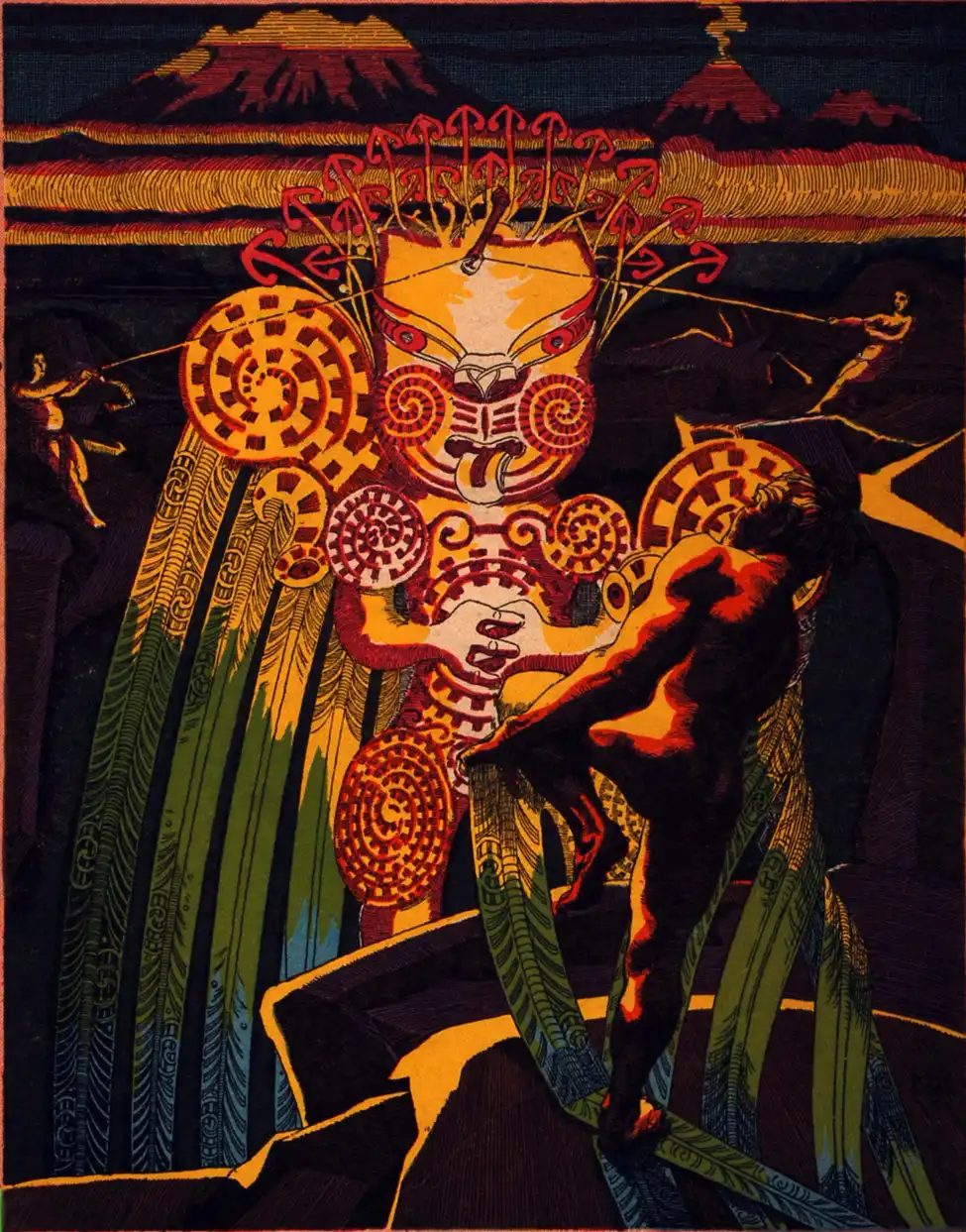
Indigenous cultures have carved out a place in their cosmologies for this energy. The archetype we are reaching for in our local ecologies is akin to Māui-tikitiki-a-Taranga. This kind of trickster does not disrupt for the sake of chaos; they disrupt to reveal blind spots, allowing the people to see their own mind reflected back at them. Operating with the fierce, playful love of the Bodhisattva, this role shows the community that true systemic wisdom is found not in polite compliance, but in engaging directly with the hazard of living.
But a local community will only value this disruption if specific conditions are met. While the conventional parent tries to control the environment so no one gets hurt, the Regenerative Spirit Resource shifts the locus of control entirely to self-determination.
In my own practice, through campfires and Practice Intensives, I must set the threshold and the hazard upfront. I have to state clearly: if you are looking to be comforted, this is the wrong fire. By declaring the hazard openly, I offer the friction as a choice rather than an ambush. When the disruption is invited, the trickster ceases to be a feared outlier and becomes a revered guide.
When you feel that familiar trickster energy rising up to dismantle the assumptions in your next community meeting or family gathering, ask yourself: are you trying to force a change in them, or are you willing to set a fire that might first burn away your own certainty?
We are not robots, but we can be habit bound and brilliantly stupid.
see you at a campfire,
Ākāśaḍāka