
A letter from Auntie Carol for those exploring the Regenerative Life
Think of yourself as unfinished. This letter from Carol Sanford is not a mechanical formula; it is a provocation. To live a regenerative life, you must drop the expert mask, lead from your unique essence, and curate your own developmental ecology in the dirt.


Introduction
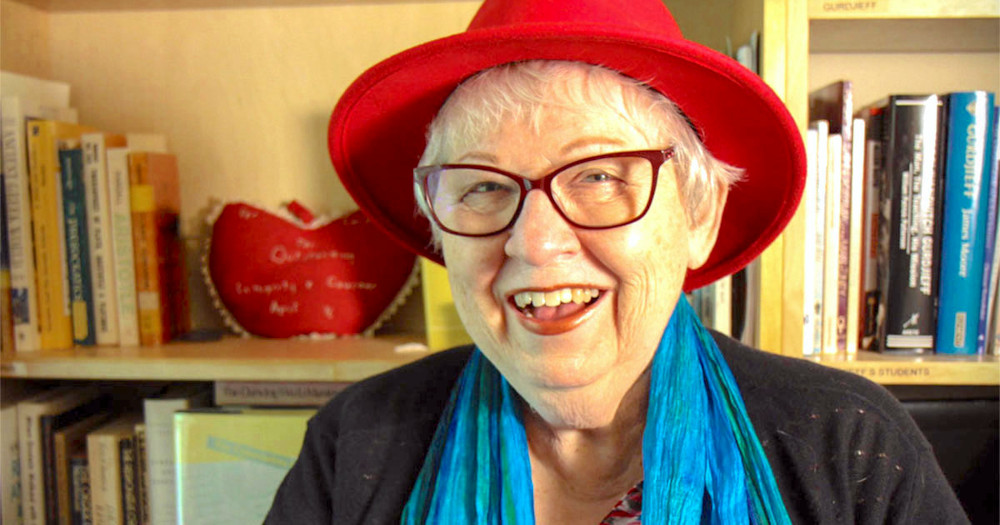
This is a letter from Carol Sanford—Auntie Carol, Goose Woman, the Positive Contrarian—wrote to the readers of The Regenerative Life. It is not a mechanical formula to copy and paste, nor is it a syllabus from an expert. It is simply a record of the instruments she used to strike her own flint. I invite you to read or listen to it as a provocation. You will not find salvation here; like me, you must curate your own developmental ecology and do the work in the dirt of your own local ecologies.
edit: I have removed references to her SEED Communities, podcasts etc... as they either no longer exist or fast losing their relevance, as she may have put it, for the Work that we all need to be alive to now.
Take It Personally. Take It to Work.
Dear Reader
I hope that you will do something with what you have read in these pages. If you've gotten this far, chances are that this is exactly what you intend. For your project to continue living a regenerative life, I have three suggestions.
Notice the Differences
You might have sensed that what I've presented here is quite different from conventional training or self-help approaches. This is true, and I'd like to make some of these differences explicit, which can perhaps be done best by expressing them as principles.
Lead from essence, not from personality.
This applies to us as individuals; we make our most distinctive contributions when we remain true to ourselves. This also applies to how we approach all the people, places, and materials around us that make up our experience of the world. When we engage them from their essences, rather than from their superficial characteristics or from the abstract ideas we form about them, we stand the greatest chance of treating them with respect and drawing from them their full potential.
To live this way, we may need to break a very common habit, which is the tendency to lump things (including ourselves) into categories. In case I haven't made it perfectly clear, I will restate here that you are not one of the nine roles laid out in The Regenerative Life. As a human being, you have the potential to step into and out of most, if not all, of these roles, but not one of them will ever become what you are. That would substitute a temporary pattern of working for your own unique essence, the root of who you really are.
And I caution you that this applies to all typologies, including others that use the enneagram as an organising structure. Any way of understanding individuals by sorting them into categories oversimplifies the complexities and emerging possibilities of a unique human life by reducing it to a broadly general pattern of behaviors or tendencies.
Move from a static to a dynamic view of life.
Because we humans are all works in progress, we can continue to grow and evolve throughout our lives, but to do so requires a certain kind of mental discipline. We must challenge the many fixed beliefs we hold about who and how we are. We often lose sight of our own capacity for change, just as we write off other people, believing that they can't or won't change. This does them, and us, a disservice.
The trick is to find ways to observe and consciously participate in changes that occur within us. This means looking beyond our current patterns or habits to watch the evolution in our thoughts, actions, effects, and outcomes. Instead of asking who you are being now, ask what you see yourself becoming. Here are some questions that can shift you to a more dynamic outlook: What is changing in my thinking, actions, effects, and outcomes? How are they different than they were yesterday? What can evolve next, if I direct effort to it? What is my aim in this regard? What will I choose to observe as the change unfolds?
Use regenerative frameworks, not models, to guide thinking.
Models are useful when the aim is to produce replicability, standardisation, and easy measurement. They are prescriptive and definitive, offering predictable answers about how things work or should work. A classic example is, "Ready, aim, fire!"
But models can help us make decisions about the world only as we currently know it. They are not capable of producing singularity and transformation, within which the essence of something can shine and be evolved. That is the work of regenerative frameworks, which reveal the dynamics of living systems, including the relationships and arenas that inform them and the potential toward which they could evolve. Frameworks don't provide answers; they offer ways to pursue open discovery. Think, for example, of the Levels of Paradigm Framework and the kind of ongoing inquiry that it invites. Models promote knowledge; they cannot lead us to the understanding that this kind of framework enables.
Journal Developmentally
Journaling provided a core practice for those who participated in the regenerative life action research, and it provided the material from which this book was drawn. Written reflection was undertaken in a very specific and developmental way. Instead of simply asking participants to describe what they were doing, I introduced regenerative concepts and frameworks for the purpose of shaking up their existing assumptions and thought patterns. Journaling gave them an opportunity to notice and reflect on the internal shifts that began to occur as a result. In other words, the project was designed to use journaling as a way to grow participants' consciousness of who they were choosing to become.
I encourage you to create a journal for yourself as you explore new ways to play your roles in society, and I've developed a simple framework to help you in this effort. I've named it with the acronym, FORM. It captures four aspects of developmental work that journaling can support.
- Framework thinking
- Observing obstacles
- Reframing/reordering
- Mastering self
I chose these activities because they evoke and affirm our active role in self-creation and the proactive reflection that journaling is intended to stimulate. I've used the word mastering instead of mastery, as a reminder that the process is open-ended and always evolving.
I also offer a process to follow as you prepare for and then reflect on a given day or event. It can be applied to any of the regenerative roles that you undertake, but remember to keep it concrete by linking it to what you have chosen to work on within a specific context. It is always tempting to make generalizations about ourselves and our lives, but opportunities for the creation of breakthroughs only ever arise in real activities and events.
1. Framework thinking: What framework will I use to examine or design a development approach to this day or event? For example, how can the Seven First Principles of Regeneration help me generate a more complete picture of what I'm working on, and what can they tell me about an evolutionary path I could pursue?
2. Observing obstacles: With regard to this day or event, which of the inner obstacles do I see at work as I pursue my objectives and goals? Can I see what triggers them? How is my ability to be self-managing evolving in this regard? What pattern changes do I see? Where do I see opportunities to engage further?
3. Reframing/reordering: With regard to this day or event, what paradigm did I engage from? How do I want to evolve my ability to consciously activate and engage a higher paradigm?
4. Mastering self: With regard to this day or event, what is the new pattern that I seek to move toward? How can I state this as an aim for myself, a new state of being that I wish to stretch and grow into? Over time: What is evolving in me? In my aim?
Note also that FORM is a set of four mantras, very short phrases to remember and reference throughout the day, as a way to remind yourself of ways to lift your work to the regenerative level and to reflect as you go.
Curate your own Developmental Ecology
A note from Ākāśaḍāka for those attending Campfires and Practice Intensives:
Participating in spaces focused strictly on development, which cohere around a common friction, accelerates your ability to evolve capacity. Whether you are exploring the value-adding role of a Regenerative Entrepreneur or an Educator, you need a shared field to test your reality. Curating your own developmental ecology is the primary mechanism for resourcing your evolution and experiencing the actual reward of regenerative living.
In Closing
Think of yourself as unfinished, a living expression of your own potential. Don't get stuck in pigeonholes of your own or others' making. You are not a number. You are not a type. Nor are you an average, a statistic, or a demographic, in spite of all the ways the world tries to categorise you as one or all of the above.
You are a unique being in a living world filled with other unique beings, and we all rely on you to play your part. Your lifelong task is to grow, deepen, and evolve yourself as a member of this living world so that its liveliness and continual regeneration become manifest in you, your actions, and what you create. This is central to what it means to work from the Regenerate Life Paradigm.
Thank you for joining us in this hopeful, caring work.
Take risks!
Carol Sanford